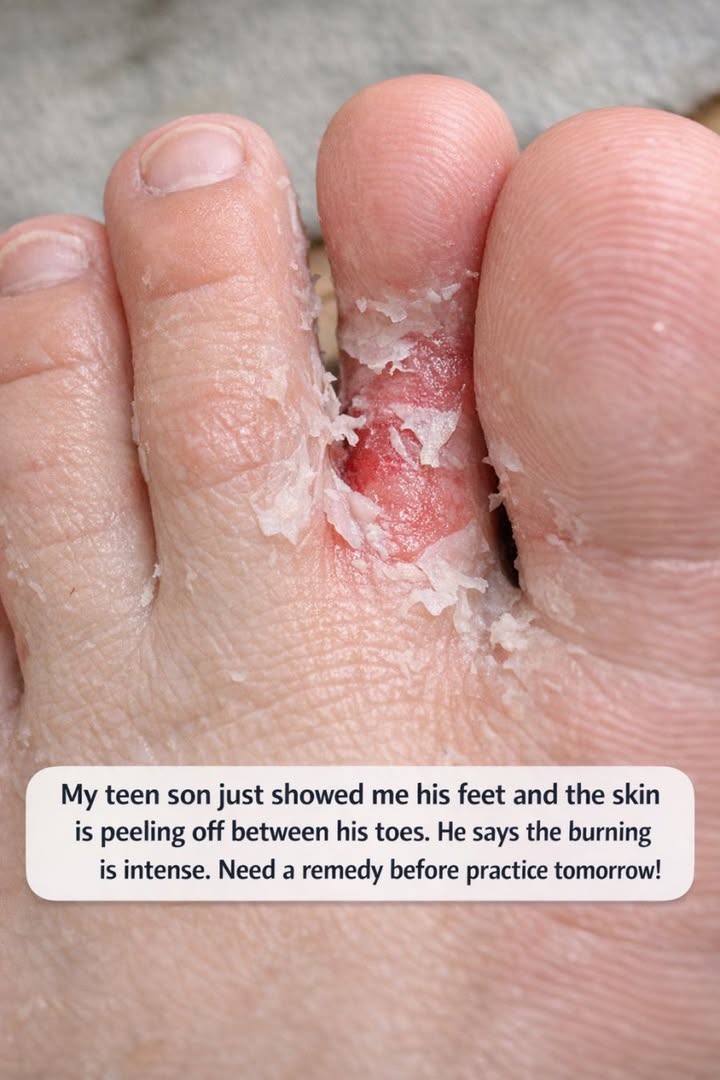
When your teen son approaches you with a problem, it can be a moment of both concern and opportunity. Seeing your child in discomfort, especially when it’s something as unexpected as peeling skin between the toes, can be alarming. This condition, often accompanied by intense burning, can interfere with daily activities and upcoming plans, like sports practice. As a parent, it’s crucial to respond quickly and effectively to provide relief and ensure your child’s well-being.
Understanding the root cause of the issue is the first step towards finding a solution. Whether it’s athlete’s foot or another condition, taking immediate action can help alleviate symptoms and prevent further complications. This article will guide you through identifying the problem, offering first aid, and providing remedies, so your son can comfortably attend practice tomorrow.
1. What That Peeling, Burning Skin Between Toes Really Means
The peeling and burning sensation between your son’s toes is often a sign of athlete’s foot, a common fungal infection. Athlete’s foot, or tinea pedis, thrives in warm, moist environments, making locker rooms and sweaty shoes perfect breeding grounds. The fungi responsible, typically dermatophytes, can cause the skin to peel, crack, and become inflamed, leading to discomfort.
While athlete’s foot is the most likely culprit, other possibilities include contact dermatitis or eczema, which can also lead to similar symptoms, though they are usually accompanied by redness or a rash elsewhere on the body. Identifying the exact cause is essential for effective treatment, so consider any recent changes in footwear, hygiene products, or environments he might have been exposed to.
2. How To Tell If It’s Athlete’s Foot Or Something More Serious
Distinguishing athlete’s foot from more serious conditions involves observing specific symptoms. Athlete’s foot typically presents with peeling, itching, and burning between the toes, often accompanied by a musty odor. If your son experiences these along with redness and swelling, it’s likely athlete’s foot.
However, if the symptoms are accompanied by severe swelling, discharge, or if the skin looks infected (red streaks, pus, or fever), it could indicate a bacterial infection, which requires medical attention. A visit to a healthcare professional is warranted if symptoms don’t improve with initial treatment or worsen over time.
3. Immediate First Aid Tonight: Cool, Clean, Dry
To provide immediate relief, focus on keeping the affected area cool, clean, and dry. First, gently wash your son’s feet with lukewarm water and mild soap. Avoid hot water, as it can exacerbate the burning sensation. After washing, ensure his feet are thoroughly dried, especially between the toes, using a clean towel.
Applying a cold compress can help reduce burning and inflammation. Wrap a few ice cubes in a cloth and apply it to the affected area for 15-20 minutes, taking breaks to prevent frostbite. Keeping his feet dry overnight is crucial, so consider using a fan or hairdryer on a cool setting to ensure all moisture is eliminated.
4. Over-The-Counter Treatments You Can Start Using Right Now
Several over-the-counter treatments can effectively address athlete’s foot symptoms. Antifungal creams, sprays, or powders containing active ingredients such as clotrimazole or terbinafine are widely available and effective. Apply the product as directed, typically twice daily, to clean, dry skin.
Using an antifungal powder can also help keep his feet dry throughout the day, reducing the environment in which the fungus thrives. Always read the label for specific instructions and ensure consistent application for the best results.
5. Home Remedies That Actually Help (And What To Avoid)
In addition to over-the-counter treatments, some home remedies can provide relief. Soaking feet in a diluted vinegar solution (one part vinegar to four parts water) for 15-20 minutes may help reduce fungal growth and soothe irritation. Another option is using tea tree oil, known for its antifungal properties; dilute it with a carrier oil and apply it to the affected area.
Avoid home remedies that involve harsh chemicals or abrasive materials, as they can irritate the skin further. Also, steer clear of applying undiluted essential oils directly to the skin, as this can cause adverse reactions.
6. When To Skip Practice And Call The Doctor Instead
While mild cases of athlete’s foot can be managed at home, there are instances when skipping practice and consulting a doctor is necessary. If your son’s symptoms do not improve after a week of treatment, or if they worsen, it’s time to seek medical advice. Additionally, signs of a secondary bacterial infection, such as increased redness, pus, or fever, require prompt medical attention.
If your son experiences severe pain or if the infection spreads to other parts of the foot or body, it’s crucial to consult a healthcare professional to prevent further complications.
7. How To Protect His Feet At Practice Tomorrow
If your son is feeling better and symptoms are under control, ensure his feet are protected during practice. Have him wear moisture-wicking socks to keep his feet dry and choose breathable shoes that allow for proper ventilation. Applying antifungal powder before practice can provide an extra layer of protection.
If possible, consider having a spare pair of socks and shoes for him to change into post-practice to prevent moisture build-up. Encourage him to remove his shoes and socks immediately after practice and wash and dry his feet thoroughly.
8. The Right Socks, Shoes, And Shower Habits For Teen Athletes
Choosing the right footwear and adopting good hygiene habits are essential for preventing athlete’s foot. Opt for socks made from natural fibers or moisture-wicking materials that keep feet dry. Shoes should fit well, provide adequate ventilation, and be alternated regularly to allow them to dry out completely between uses.
Encourage your son to adopt a habit of thoroughly washing and drying his feet after activities. Using flip-flops in communal showers and locker rooms can also reduce the risk of infection. Reinforce the importance of never sharing towels, socks, or shoes with others.
9. Preventing Athlete’s Foot From Spreading Through The Team
To prevent athlete’s foot from spreading among teammates, it’s important to promote good hygiene practices. Ensure your son understands the importance of not sharing personal items like shoes and towels. Encourage the team to clean and disinfect locker rooms regularly.
If your son is currently dealing with athlete’s foot, inform the coach or team trainer so they can take appropriate measures, such as increased cleaning protocols or advising other players to watch for symptoms. Educating the team about the condition can help reduce stigma and encourage prompt reporting of symptoms.
10. Long-Term Foot Care Habits To Stop Recurring Flare-Ups
Developing long-term foot care habits can help prevent recurring athlete’s foot infections. Regularly changing socks and shoes, maintaining proper foot hygiene, and using antifungal powders as a preventative measure can significantly reduce the risk of recurrence.
Encourage your son to inspect his feet regularly for any signs of infection and to address issues promptly. Maintaining a routine of foot care, even when symptoms are not present, is key to long-term prevention.
11. How To Talk With Your Teen So He Doesn’t Hide Foot Problems Again
Open communication with your teen is essential to ensure he feels comfortable discussing health issues. Approach the topic with understanding and emphasize that foot problems are common among athletes and nothing to be embarrassed about. Reinforce that addressing issues early can prevent them from becoming more serious.
Create an environment where your son feels safe to express concerns and ask questions. Regularly check in with him about his well-being, and remind him that taking care of his health is a priority, even when it involves seemingly minor issues like foot care.
RemedyDaily.com does not give medical advice, diagnosis, or treatment
My teen son just showed me his feet and the skin is peeling off between his toes. He says the burning is intense. Need a remedy before practice tomorrow!